

Cézanne’s Palette
What I Found on the Streets of Aix

“We should present the image of what we see and forget everything that came before us.”
—Paul Cézanne
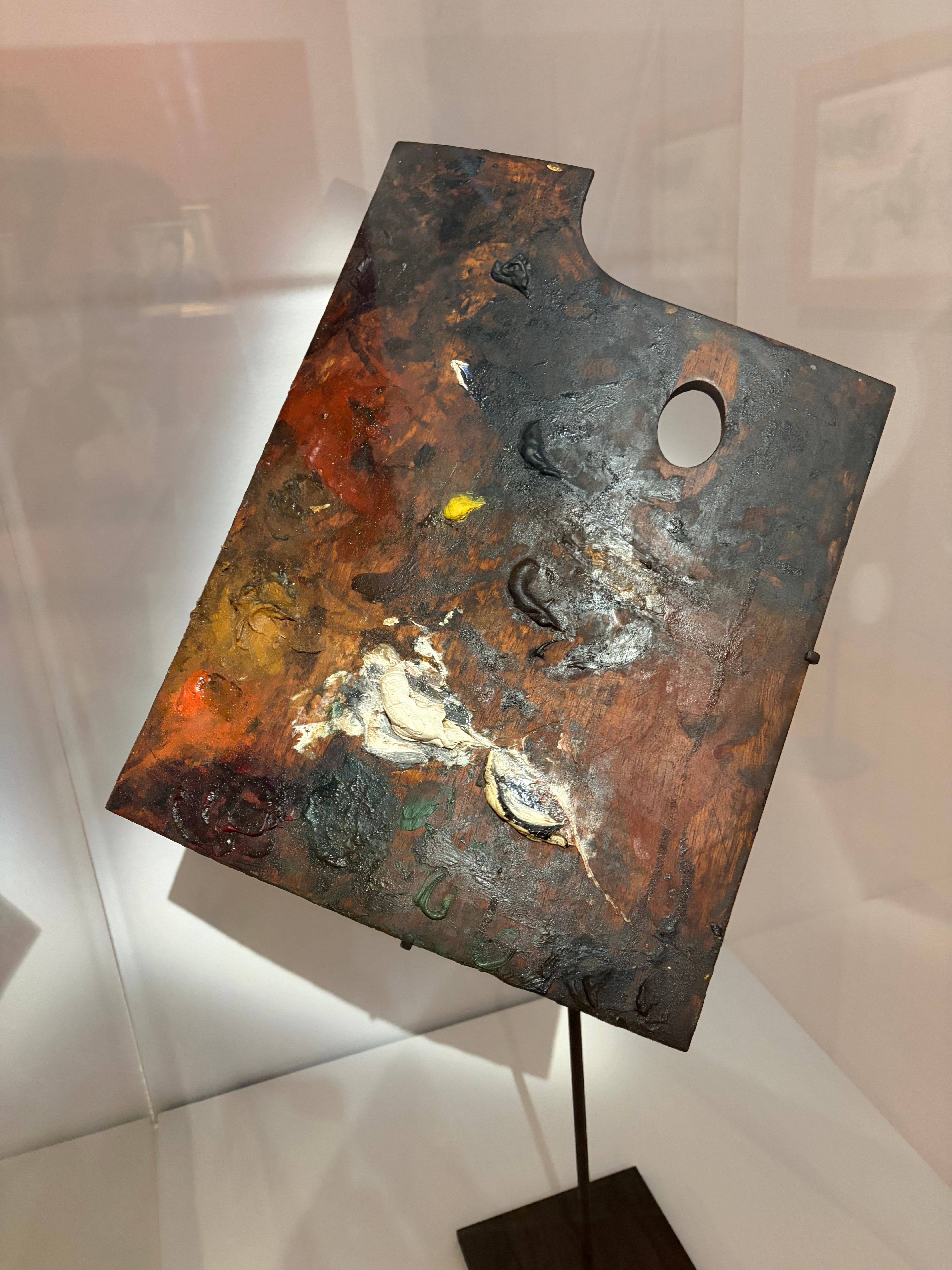
I saw Cézanne’s palette yesterday, at a museum whose director said, during the artist’s lifetime: “While I am alive, no Cézanne will be allowed to enter the museum.” I walked the cobblestone streets of that town, the stones with the artist’s name embedded in them, the same streets he walked each day as children threw rocks at him. And I thought about legacy.
That museum now has a permanent collection dedicated to Cézanne and his art, and the city that once rejected this man is now in the middle of a yearlong celebration of his work. There’s a lesson there, I suppose, about patience and perseverance, about how the world may come to receive your genius, but I doubt he was thinking about any of that while dabbing at his palette, mixing up new colors, deciding where they would go and what they would become.
The patience of an artist is never with his audience. It’s always with himself.
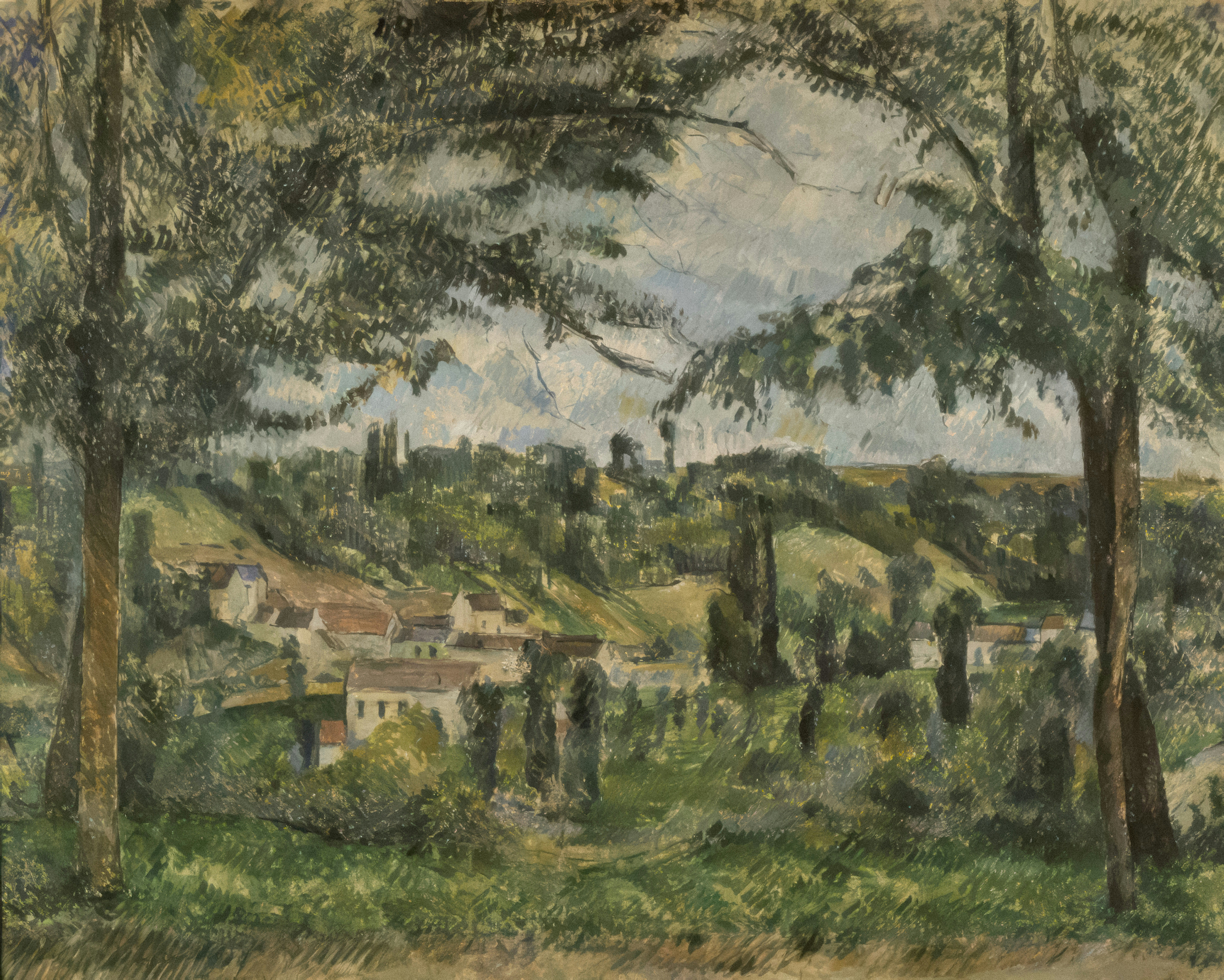
It was said of Cézanne that he only painted what he knew. He would stare at a blank part of the canvas, waiting for a vision to emerge, and he wouldn’t force it. He would just wait. This was a man who worked and lived largely in seclusion for decades without getting much public attention, who dealt often with the misunderstandings of his family and fellow Provençals, many of whom thought he was crazy as he quietly, perhaps unintentionally, created a new form of art.
“He was the father of us all,” Picasso said. Rilke, too, was inspired, feeling pushed by the man and his blurry paintings, compelled to answer some inner urge within: “I am on the way to becoming a worker, on a long road perhaps, and probably I’ve only reached the first milestone; but still, I can already understand the old man who walked somewhere far ahead, alone . . .”1
True pioneers call to something in us, some foreign place of our own we have not yet explored. To attempt greatness requires courage. When we see someone pursuing their genius, we are moved to respond. Their bravery is an affront to all the ways in which we sell ourselves short, in which we do not answer our own daemon.
This is the question every artist grapples with. Will he do what is expected of him, or what is required? The two are not the same. One is a question of role, of performance; the other is a matter of duty to oneself. To forsake the former is to risk embarrassment, maybe even poverty. But to neglect the latter is to deny one’s soul, and that is an entirely different kind of wager.
It is clear which route Cézanne took.
You can see it in his art. You can feel it in his broad, bold brushstrokes. He is not playing small, not for little children throwing rocks, not for family or friends, not even for society. He is playing for keeps, and it’s all there in every true thing he painted. There comes a time in every artist’s life when, as Emerson put it, you must arrive at “the conviction that envy is ignorance” and “imitation is suicide.” You must take yourself “for better, for worse, as [your] portion; that though the wide universe is full of good, no kernel of nourishing corn can come to [you] but through [your] toil bestowed on that plot of ground which is given to [you] to till.”
You must come home to yourself.
Artists inspire us because they are willing to do what so few are capable of doing. That is, they tell the truth, not with words but in how they live. Cézanne tilled his land: he worked it through until some inevitable harvest came, one the world is still marveling at. He found something original, a seed of honesty he spent his life cultivating. Once possessed of this kernel, he had nothing to do but work.
I exited the museum and walked the streets of Aix-en-Provence, the city Cézanne called home. I grappled with my own version of the artist’s dilemma: Would I be true, or would I settle? This is always what I am asking. And when I came home, I spent a long time looking at the only picture I snapped at the museum—the one of the palette—and I started writing.
P.S. My wife and I are enjoying our time in the south of France and will soon be driving up to Brittany to lead a writing retreat with our good friends Joe and Talia Bunting. We had a last-minute cancellation for the retreat, so if you are interested in joining us in Dinard and can get to France next week, send me an email (details are here). À bientôt!
From Letters on Cézanne by Rainer Maria Rilke.
One of my favorite things you’ve ever written, thank you! Enjoy the writing retreat 😊
This line in particular, Jeff: “You must come home to yourself.” The wisdom in that. Writers should paste that line above their keyboards to resist “polishing” their work with AI. Artists aping their heroes should stop and look inward. Flannery O’Connor said that if we survived our childhoods we have enough information about life to last the rest of our days. All we have to do, as you wisely write, is “come home to yourself.” By the way, I remember Joe Bunting from years back in your workshop. Soft spoken, smart, engaging. Your current attendees will gain much.